

Inside the LiveWire–DUST Moto Deal: A Sit Down with Colin Godby

Updated: Aug 8
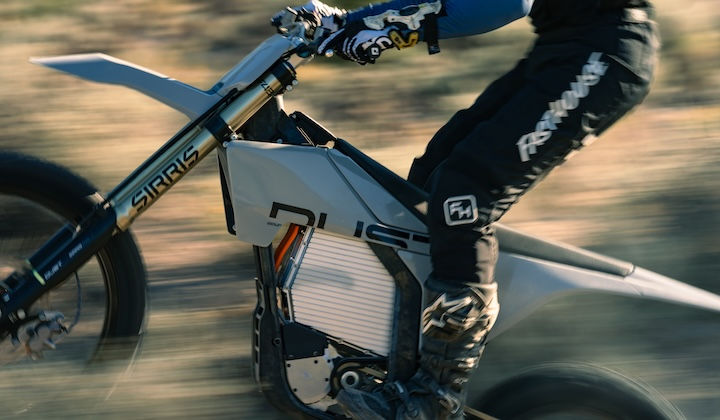
When LiveWire announced it had picked up DUST Moto, riders immediately started drawing comparisons to past electric motorcycle casualties. But according to DUST co-founder and CEO Colin Godby, this wasn’t a panic sale or a boardroom rescue. It was a move that had been taking shape behind the scenes for over a year.
In an exclusive interview with Buck City Biker, Godby breaks down how a fundraising process gradually turned into a full acquisition, and what it signals for the next phase of DUST Moto's Hightail.
For more LiveWire news, visit our LiveWire page.
For the DUST Moto spec sheet, visit here.
Back to Basics: Building an E-Moto Company Isn't Easy

Building a motorcycle business in the US is as much a capital problem as it is an engineering one. DUST Moto joining forces with LiveWire isn’t just about growth. According to Godby, it’s about getting into a stronger position to execute in one of the toughest corners of powersports, where even well-funded electric start-ups struggle to reach real scale.
“We wanted to build a business that can succeed, not just an amazing product”
That’s the reality in a sector where engineering alone doesn’t guarantee survival. Capital is tight, especially when investors are chasing bigger, faster-return sectors like trillion-dollar tech companies.
“It is objectively very difficult to start a vehicle business. Motorcycles are multi-billion-dollar markets in the US, but it’s not a trillion-dollar market.”

For a hardware-heavy category like motorcycles, that leaves very little room for error.
DUST Moto wasn’t actively looking for a buyer. The company was in the middle of a fundraising process aimed at scaling production and strengthening its position in a brutally competitive sector.
“We wanted to feel a strong alignment in brand ethos, DNA and team. We wanted to build a brand that resonates and connects with riders in an authentic way.”
DUST spoke with investors in China and India during its fundraising process, but the focus was finding the right long-term fit, even if that meant walking away from bigger or faster cheques. It was during those conversations that LiveWire began to emerge, not as a potential exit, but as a natural partner.
What LiveWire Brings to the Fold

The LiveWire deal doesn’t shift the core of the Hightail. What it changes is everything around it. A small Oregon operation is now plugged into a global manufacturing and engineering system. For Godby, it’s not identity that changes, it’s capacity.
That’s what happens when a small OEM plugs into a full-scale motorcycle ecosystem.
“Dust was strategic because of where we’re at in the process. We’re really close to starting production. We’ve got a lot of production tooling already built.”
At this stage, start-ups either accelerate into production or get stuck in validation loops. LiveWire’s role is to push testing and production readiness forward at pace and scale, not redesign the bike.
“LiveWire’s going to raise the bar in terms of the testing capabilities and requirements. Having that direct connection to Harley’s programmes and expectations for start of production is really impressive.”
The team remains based in Bend, Oregon, but now has access to wider engineering, supply chain, and dealer infrastructure through LiveWire and Harley-Davidson.
“We get a force multiplier on the most critical elements of the process right now. It’s deep into the weeds of checking all the production readiness boxes.”
Even with LiveWire now sitting around them, the tone from DUST isn’t a takeover story. It’s more a continuation with better tools.
“It’s still our baby. But now it feels like we can move from survival mode into actually figuring out how to thrive and grow this thing.”
DUST Moto’s story is still unfolding. Only now there’s a much bigger garage behind it.
“It’s been an epic journey. I’m just really proud and thankful for the team around us and excited that we get to keep doing what we love - building bikes."
The BCB Take

The easy headline is “LiveWire buys DUST.” The more interesting story is why DUST wanted the deal in the first place.
What Godby describes instead is a fundraising process that gradually converged with LiveWire’s own strategic direction, until the line between investor conversation and acquisition stopped being meaningful.
DUST gets the backing, testing capability and manufacturing infrastructure it needed but couldn’t build alone at speed. LiveWire gets a sharper entry point into dirt. But the more important signal is unchanged: this is still a company being built by people who think like riders first.
In a sector that has burned through more brands than most riders can count, that difference may be what decides who actually survives.
Ride safe, folks.
Enjoyed this story? Subscribe to our newsletter. It's free, no spam, just an email on Friday with the week's headlines.


