

Raptee.HV T30: Have Electric Motorcycles Been Solving the Wrong Problem?

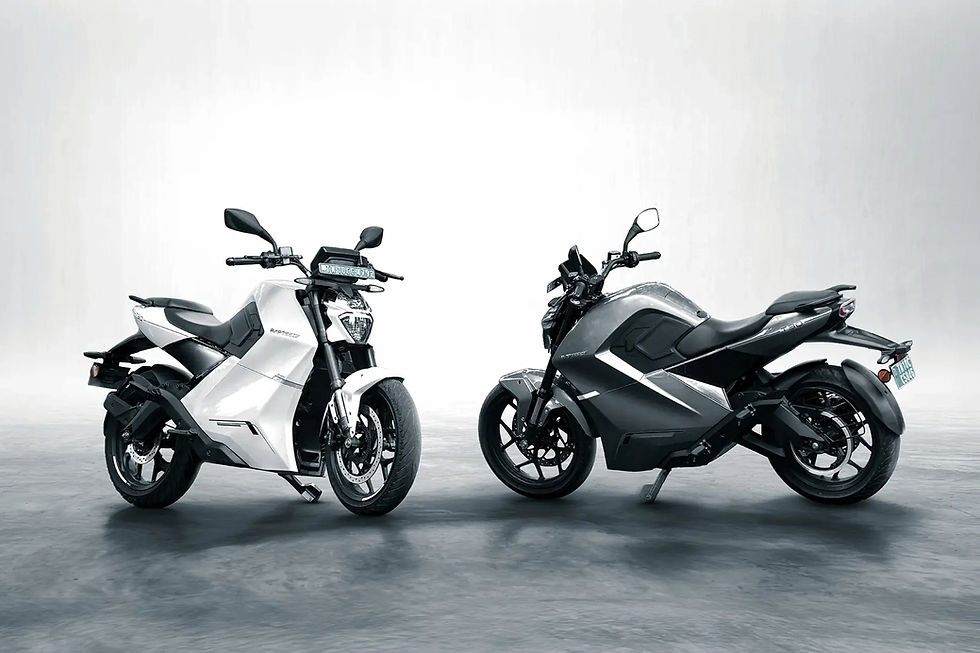
The Raptee.HV T30 doesn't just promise fast charging. It asks whether electric motorcycles have been built the wrong way all along.
The Indian-built production roadster combines a 22 kW motor, a claimed 200 km range and a 135 km/h top speed. But the story behind the T30 isn't its motor output or range figure. It's the electrical architecture beneath the saddle.
More Than Just Fast Charging

The Raptee.HV T30 is aimed at the growing middleweight market, offering performance comparable to a 250-300cc petrol motorcycle. On paper, it ticks the right boxes with respectable range, everyday performance and DC rapid charging that can take the battery from 20 to 80 per cent in around 36 minutes.
Raptee.HV T30: Vital Specs
Motor: 22 kW peak output
Battery: 5.4 kWh lithium-ion
System voltage: 240V architecture
Range: 200 km (IDC estimated)
Top speed: 135 km/h
Charging: CCS2 DC rapid charging
20-80% charge: Around 36 minutes (claimed)
Weight: 177 kg (claimed)
Full spec sheet: visit our T30 spec page.

But one number matters more than the rest. And no, it's not the 22 kW motor or the 135 km/h top speed.
We've written before about the industry's move towards higher-voltage electrical systems, with manufacturers chasing better efficiency and performance. The T30 is one of a small but growing number of electric motorcycles built around that architecture.

The thinking behind higher-voltage systems is actually pretty simple. electricity hates wasting energy. Higher voltage means less current is needed to deliver the same power, which reduces heat, allows lighter cabling and helps engineers package the system more efficiently. The trade-off is that higher-voltage systems require more complex safety measures and components, which is why many lower-cost electric motorcycles still rely on 72V to 180V systems.

This isn't just a charging theory exercise. The T30 is now reaching customers in India, giving riders the chance to test whether Raptee's approach works beyond the launch headlines.
Raptee has already put it to the test. The T30 completed a 7,530 km ride across India in 19 days, using public charging infrastructure along the route. While a record attempt doesn't prove what every rider's ownership will be like, it does show why Raptee focused on CCS2 charging and a higher-voltage electrical system in the first place.

The T30 isn't the first to explore this route. Lightning showed what was possible with 800V technology years ago with the LS-218, and Energica proved that high-performance e-motos could combine higher-voltage systems with CCS DC rapid charging. More recently, bikes such as the Yadea Kemper have shown that this approach is beginning to move into a wider part of the market.
Raptee is part of that shift, where technology once seen mainly on specialist and premium electric motorcycles is starting to appear in bikes aimed at a broader audience. By combining a middleweight roadster with what Raptee describes as automotive-inspired electrical architecture, the T30 offers a glimpse at how the next generation of electric motorcycles could be engineered.
The BCB Take

Raptee.HV isn't trying to reinvent the motorcycle. It's questioning why electric motorcycles have spent so long trying to solve the wrong problems.
Riders don't care whether their bike runs at 72V, 300V or 800V. They care whether it fits into their life. If Raptee's approach means faster charging and fewer compromises on longer rides, the T30 could end up being remembered for much more than its performance figures.
Maybe we've spent too much time trying to win the numbers game and not enough time making electric motorcycles easier to choose, charge and live with.
Ride safe, folks.
Don't miss the next story. Subscribe to our newsletter. Free, no spam, just an email on Fridays.
Want more from BCB? Become a member for exclusive offers, community benefits and more.


