

Is Ather’s New Konarc More Than Just Another Electric Scooter?

Updated: Sep 8

Ather has launched the Konarc, and behind this £1,000-ish commuter scooter is a development process built around real-world riding data, extensive testing and a lot of work before it reaches the showroom.
The Konarc is the first production scooter to use Ather Energy's new EL platform, the company's first new scooter architecture since the original 450.
Compare the Konarc's specs side-by-side with other e-motos in BCB Bike Compare.
The Road to the Konarc
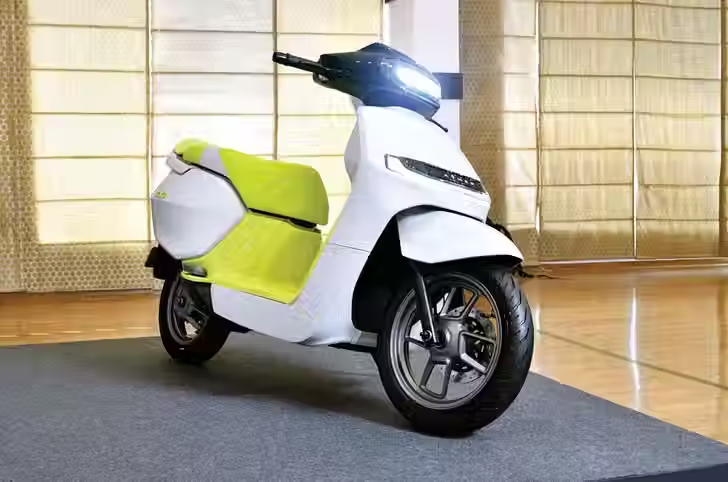
The launch event took place at Ather Community Day on August 29, and the Konarc is our first look at what they've built underneath the bodywork. The EL platform is designed to support Ather's next generation of scooters.
To develop EL, Ather went back to the data from its existing riders. The company says it used 2.6 million km of field data to help shape the new chassis, powertrain and electronics.

Data is good, but it only gets you so far. Before the Konarc reached production, Ather says it put the finished scooter through more than 2,000 tests.
Those included drop, load, vibration and compression testing, along with rain and water-wading simulations. The company also used accelerated durability testing designed to simulate around 100,000 km of riding. From their reports, it looks like they tested everything, and then tested it again.

But all of that work ends up in a fairly conventional-looking commuter scooter, which might be a clue to how Ather has kept the price so low. The Konarc uses a steel unibody chassis, with a 14-inch front wheel and 12-inch rear. And Ather plans to use the platform across multiple S and Z variants, with different battery and range options.
For now though, the Konarc S is the first version to reach the market. It comes with the choice of 2.1, 2.7 and 3.5 kWh battery options, with claimed IDC range running from 100 km to 161 km. And Ather's claimed TrueRange figures are 80 km, 100 km and 130 km.
Pricing starts at ₹99,999 (around £1,057 / €904 / $1,048) for the S 100, rising by around 20% for the S 125 and 45% for the S 161. If you're thinking of grabbing one, it's India-only for now.
The BCB Take

Every manufacturer tests its bikes. The question here is how Ather has managed to put all this development and testing into a scooter that starts at ₹99,999.
A big part of the answer appears to be the EL platform itself. Ather says it has reduced the number of components, made assembly 15% faster and cut periodic service times by up to half.

We still don't know how the Konarc will hold up after years of real-world use. 100,000 km of accelerated testing isn't the same as 100,000 km of potholes, rain, heat and daily commuting.
But if Ather can turn that development process into a reliable scooter at this price, it makes a pretty strong case that electric two-wheelers don't have to be expensive to be properly engineered.
The real test now isn't another lab cycle. It's what happens when thousands of ordinary riders start putting kilometres on the thing.
Ride safe, folks.
Tired of scrolling? Subscribe to our newsletter. It's free, no spam, just an email on Friday.
Want more from BCB? Become a member.


