

Africa’s Electric Motorcycle Boom: Why Riders Matter More Than Technology

Updated: Jul 24

The next big electric motorcycle market might not be where many people expect.
While riders in Europe and North America weigh up range, charging times and performance figures, many African riders are asking a much simpler question: will this bike help me earn more money?
That difference is shaping one of the most interesting electric motorcycle markets in the world. Across much of Africa, electric motorcycles are not being sold as lifestyle products. They're being adopted as the backbone of small businesses, delivery networks and motorcycle taxi services, judged largely by how reliably they operate, how much they cost to run and whether they can survive the heat, dust and daily punishment that come with earning a living on two wheels.
For more Market News, visit The Market category
This Isn’t A Motorcycle Trend. It’s A Transport Shift
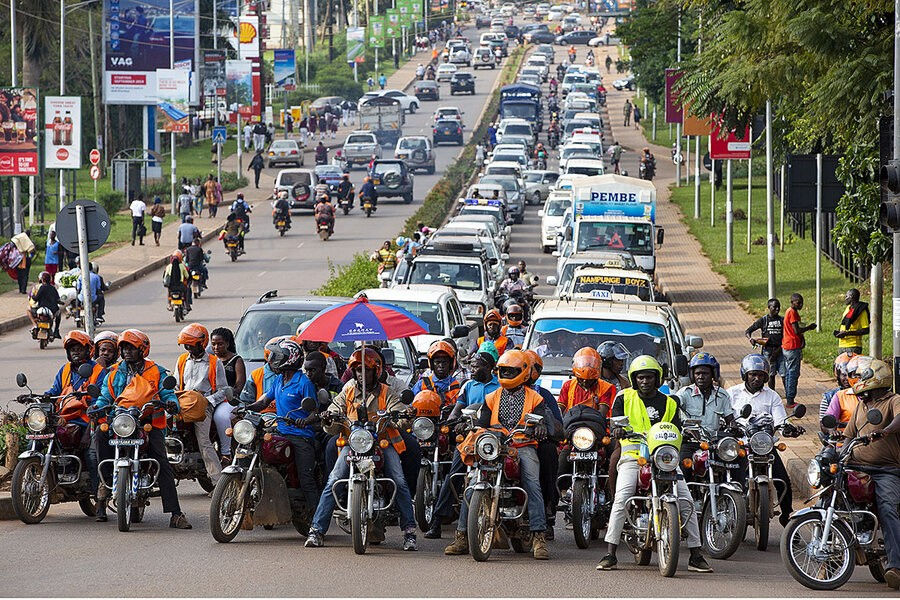
Across many African countries, motorcycles aren't weekend toys. They're working vehicles that carry passengers, deliver goods and support thousands of small businesses.
In East and West Africa, motorcycle taxis are a major part of everyday transport. Known as boda bodas or okadas, these riders often spend their entire working day on two wheels. When your motorcycle is your livelihood, the buying decision changes completely.
A rider covering hundreds of kilometres a week probably doesn't care about the biggest touchscreen or the most impressive acceleration figures. They care about three things: how much does it cost to run? How reliable is it? How quickly can I get back on the road?
The bike also has to survive long days in heat, dust and rough roads, because every breakdown costs the rider money.
The opportunity is huge. Estimates suggest there are close to 30 million motorcycles working in Africa's motorcycle taxi sector alone, with the vast majority still powered by internal combustion engines. This is not a small group of early adopters. It's a huge workforce looking for a cheaper way to earn a living.
The shift is already showing up in the numbers. Kenya, one of Africa's leading e-moto markets, had just 44 electric motorcycles on its registration books eight years ago. By 2025, that number had grown to more than 25,000. Electric motorcycles also accounted for 15.3% of all new motorcycle registrations in 2025, up from just 3.6% two years earlier. This is no longer an experiment. It's a market gathering momentum.
The Real Enemy Isn't Petrol, It's Operating Cost

For a normal motorcycle owner, fuel prices are annoying. For a commercial rider, fuel prices can decide whether the business survives or dies. A rider who spends all day carrying passengers or delivering goods is constantly calculating costs. Every litre of petrol comes directly out of their earnings.
That is where electric motorcycles start to make sense. The appeal isn't more power or bigger screens. It's simple economics. The more hours a motorcycle spends working, the more fuel and maintenance costs matter.
Electric motorcycles can reduce some of that pressure. Electric motors have fewer moving parts than combustion engines, which can mean less routine maintenance over time. More importantly, electricity can be significantly cheaper than petrol on a cost-per-kilometre basis, giving riders an opportunity to keep more of what they earn.
Running costs are only part of the equation. Uptime matters just as much. A motorcycle taxi rider cannot earn money while their bike is off the road. Every day spent waiting for repairs or routine maintenance is a day without income.
For riders using their motorcycles to earn a living, the maths is brutally simple. The bike needs to cost less to run, spend less time off the road and leave more money in the rider's pocket at the end of the day. If it can do that consistently, the fact that it happens to be electric becomes a bonus rather than the main selling point.
The Companies Betting On Africa

The companies making progress in Africa are not just selling motorcycles. They're building everything riders need to keep those motorcycles earning money. In many cases, the bike is only one part of the solution.
Spiro: Betting Big On Battery Swapping
One of the biggest names in the market is Spiro. Spiro has focused heavily on electric motorcycles combined with battery-swapping infrastructure.
The company has attracted major investment to expand its operations, manufacturing capacity and battery-swapping network, including a reported $270 million funding round alongside a $50 million debt facility. The scale of that investment shows the confidence behind the battery-swapping model and commercial electric motorcycles.
Spiro says it has deployed more than 100,000 electric vehicles and operates thousands of battery-swapping locations across African markets. The important point is not simply the size of the investment. It's the business model behind it.
Spiro is trying to make electric motorcycles work in the same way petrol motorcycles already work for commercial riders. Put plainly, they keep the bike moving, keep the rider earning, and reduce the cost of every kilometre.
Ampersand: Building For Working Riders
Ampersand has taken a focused approach by targeting motorcycle taxi riders. Based in Rwanda, the company has concentrated on the boda boda (motorcycle taxi) market, where motorcycles are not just transport, they are a livelihood.
Ampersand's approach highlights an important lesson from Africa's e-moto market. The motorcycle itself is only part of the product. Financing, battery access and servicing matter just as much. A rider cannot afford a bike that looks good but spends half its life waiting for support.
Roam: Building Locally
Roam represents another important direction: local manufacturing. Based in Kenya, Roam has invested in producing electric motorcycles and other electric vehicles locally. Local production makes a difference because importing bikes is only the first step. Keeping them running is the real challenge.
Local assembly, spare parts and technical support may prove just as important as the motorcycle itself.
Three very different companies, but all working towards the same goal: making electric motorcycles practical enough to earn a living from.
The Bike Is Only Half The Story

The rapid growth of Africa's e-moto sector has attracted a wave of new companies looking to capture a share of what could become one of the world's largest electric motorcycle markets. But designing a capable motorcycle is only the starting point.
The real challenge is building everything around it. Battery-swapping networks, service centres, financing programmes and reliable spare-parts supply chains all require significant investment. Without that support, even a well-designed motorcycle can quickly become difficult to own and operate.
That helps explain why companies such as Spiro continue to attract substantial funding. Success in this market is no longer measured by how many bikes a company can sell, but by how effectively it can keep those bikes working. As the sector matures, the companies with the strongest infrastructure and support networks may be the ones that ultimately shape Africa's electric motorcycle future.
Why Isn't This Happening Faster Elsewhere?

One question keeps coming up: if this model works so well, why is it not happening faster in Europe, North America or Australia?
Part of the answer comes down to how motorcycles are used. In many European, North American and Australian markets, motorcycles are often lifestyle purchases rather than essential transport. Riders might commute during the week, head out for a weekend ride or put a few thousand miles on the clock each year. The purchase is often driven by enjoyment as much as economics.
In many African markets, the equation is very different. A motorcycle is often a working asset. It carries passengers, delivers goods and generates income every day. That means riders pay much closer attention to operating costs, fuel bills and downtime because those factors directly affect what they take home at the end of the week.
That daily use changes the economics. A rider covering hundreds of kilometres every week feels the impact of fuel and maintenance costs far sooner than someone who only rides occasionally. It also explains why battery swapping has gained traction. When every minute off the road costs money, keeping a motorcycle moving becomes part of the business model.
None of this means the African model will stay in Africa. If battery swapping, battery-as-a-service and lower operating costs continue to prove themselves, there is no reason similar approaches could not spread to delivery fleets, couriers and commercial operators in other parts of the world. Africa has created one of the clearest tests of the idea at scale.
That's one reason Western manufacturers are still finding their feet. Even brands like LiveWire, which recently reported encouraging sales growth, are operating at a very different scale. While many markets are still debating whether electric motorcycles make sense, African riders are already answering that question with their wallets.
What The Rest Of The World Can Learn From Africa

Africa's electric motorcycle growth may offer a glimpse of where the wider industry is heading. The challenges riders face there have forced companies to focus on more than just the motorcycle itself. Building a better battery is only one piece of the puzzle. Building a business model that works for riders may matter just as much.
We've already seen governments begin setting the direction of travel. Delhi's decision to make new two-wheeler registrations electric from 2028 is another example of markets evolving in different ways, but towards the same destination.
The lesson for the wider industry is simple: lowering the upfront cost may matter just as much as improving the motorcycle itself. Battery swapping and battery-as-a-service models are one way companies are trying to make electric motorcycles accessible to more riders.
This is a challenge other markets will eventually face too. An electric motorcycle is only useful if riders can keep it charged and available when they need it.
The motorcycle industry has always relied on a wider network of fuel stations, mechanics and spare-parts suppliers. Electric motorcycles are no different. Riders still need financing options, servicing support and access to replacement parts. Africa's emerging e-moto sector is showing that electric motorcycles will succeed through the entire ownership experience, not just the motorcycle itself.
The ICE Industry Should Be Paying Attention

For years, the electric motorcycle debate has often centred on performance, range and rider preference. Those discussions matter, but they can sometimes miss a more important point.
The strongest case for electric motorcycles may not be among enthusiasts at all. It may be among riders who treat a motorcycle as a business tool.
Commercial riders operate in a world where every cost is measured. Fuel, servicing, repairs and downtime all affect profitability. If an electric motorcycle can reduce those costs without compromising reliability, it stops being an alternative and becomes a practical business decision.
That is what makes Africa so interesting. The continent's growing e-moto sector is not being driven by riders chasing new technology. It is being driven by riders looking for a more efficient way to work.
For traditional motorcycle manufacturers, that should be worth watching closely. Commercial riders have long been one of the most important parts of the global motorcycle market. They buy motorcycles because they need them, they ride them hard and they replace them regularly. If electric motorcycles can establish a clear economic advantage in that segment, adoption could happen faster than many people expect.
This does not mean petrol motorcycles are about to disappear. Internal combustion machines remain deeply entrenched and will continue to dominate many markets for years to come. But Africa may be showing where electric motorcycles can gain meaningful ground first.
Not through performance. Not through technology. And not through marketing. Simply by helping riders spend less and earn more.
The BCB Take

Africa’s electric motorcycle revolution cuts through a lot of the noise that's heard elsewhere in the world.
There is no obsession with making the bike look futuristic. No race to build the most expensive machine. The question is much simpler: Does this bike help the rider earn more? That might be the most important test of all.
The future of electric motorcycles may not belong only to the companies building the fastest bikes or the biggest batteries. It may belong to the companies that understand the person actually sitting on the motorcycle.
The rider who needs to work.
The rider who needs reliability.
The rider who needs every kilometre to make financial sense.
Africa may be showing the rest of the industry that riders don't buy motorcycles because they are electric. They buy them because they solve a problem.
Ride safe, folks.
Want more industry analysis like this? Visit our new The Market section for deeper dives into the trends, data and decisions shaping the future of electric motorcycles.
Don't miss the next story. Subscribe to our newsletter. Free, no spam, just an email on Fridays.
Want more from BCB? Become a member for exclusive offers, community benefits and more.


