Vespa's New Electric Range: Has It Finally Caught Up?


Vespa is having another crack at electric, but has it done enough to catch up with the rest of the market?
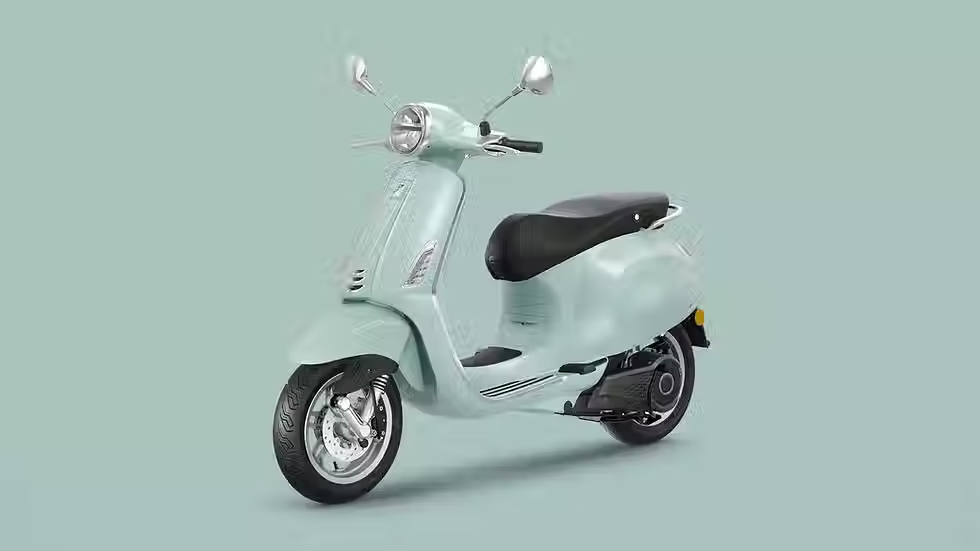
Unveiled at EICMA, the 2027 range brings three familiar names, a new electric motor and a little more technology. There are some improvements, particularly with the Primavera Tech. We've had our doubts about the Primavera Elettrica. But for 2027, Vespa is clearly putting more into its electric scooters. Whether it's enough to make a real difference is another question.
Check out our previous coverage of the Primavera Elletrica.
Has Vespa Finally Found Its Spark?

The line-up consists of the Primavera Elettrica, Sprint S Elettrica and Primavera Tech Elettrica. All three get a new motor, developed and built in Italy by Piaggio. We're promised more torque, sharper response and better efficiency, but it looks like we'll have to take Vespa's word for it.
The two moped versions, the Primavera and Sprint S, are still limited to 45 km/h (28 mph), with up to 85 km (53 miles) of range in ECO mode. Both have removable batteries. The new motor should give them a bit more shove off the line, which is useful when pulling away in city traffic. The trouble is, they soon hit that 45 km/h ceiling. On roads where traffic is moving faster, there's nowhere left to go. A bit more punch is welcome, but it doesn't solve the bigger problem.

The Primavera Tech is where things get a little more interesting. It's classed as a motorcycle and tops out at 67 km/h (42 mph), but its claimed WMTC range rises by 12.5% to 90 km (56 miles). Vespa also claims a 17% reduction in the electricity needed to charge the battery, and ECO range is quoted at 100 km (62 miles).
Here's how the new models compare with their predecessors:
Specification | Previous Primavera Elettrica 45 | 2027 Primavera / Sprint S | Previous Primavera Tech 70 | 2027 Primavera Tech |
Top speed | 45 km/h (28 mph) | 45 km/h (28 mph) | 67 km/h (42 mph) | 67 km/h (42 mph) |
WMTC range | 68 km (42 m) | Not stated | 80 km (50 m) | 90 km (56 m) |
ECO range | Not stated | 85 km (52 m) | Not stated | 100 km (62 m) |
Battery capacity | 2.3 kWh | Not stated | 4.2 kWh | Not stated |

The Tech gets a 5-inch TFT display, smartphone connectivity with navigation directions on screen, and keyless operation. The standard Primavera and Sprint S are a little more basic, with Vespa MIA connectivity available as an optional extra.
There's one fairly important detail missing, though. Vespa hasn't published rated power, peak power or torque figures for the new motor. So, while we're being told it's better, we don't have the numbers to show just how much better.
And Piaggio already has the 1 Active in its electric scooter line-up, capable of 60 km/h and offering up to 80 km of claimed ECO range. So this isn't the group's first go at building a practical electric scooter.
For the 2026 Elettrica and Piaggio 1 Active full spec sheets, head to BCB Bike Compare.
The BCB Take

On paper, Vespa still has some catching up to do. Two models are stuck at 45 km/h, while the Primavera Tech gets a modest improvement. It's unlikely to have competitors quaking in their boots.
But does a Vespa really need to join the performance arms race to make a good electric scooter? Its appeal has never been about outright speed. These are small, lightweight machines built for getting around town. Maybe the performance on offer is already enough for most Vespa riders.

A new motor and a smarter dashboard are welcome. And if the range, charging convenience and everyday usability are right, chasing bigger motors and higher top speeds might add little to the experience. Maybe catching up isn't about building the fastest electric scooter. It's about giving Vespa riders a better version of the scooter they already know and love.
That's a different kind of progress.
Ride safe, folks.
Tired of scrolling? Subscribe to our newsletter. It's free, no spam, just an email on Friday.