

Kawasaki’s Electric Ninja Is Back. But Do They Really Care?

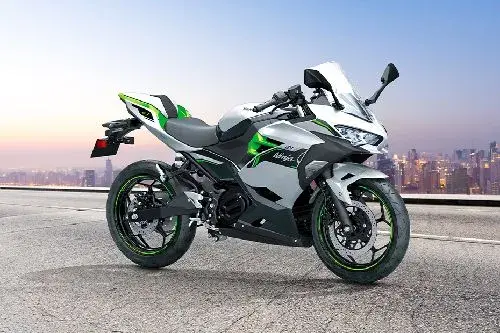
Kawasaki seems confident enough in its electric Ninja to carry it into another model year. But is that confidence, or is Kawasaki simply making sure it can say it has an electric motorcycle?
The 2027 Ninja e-1 is here, giving us a chance to see just how seriously Kawasaki is taking electric motorcycles.
To compare the Ninja e-1 side-by-side with other e-motos, visit BCB Bike Compare.
Kawasaki Is Still In The Electric Game

There was a time when seeing Kawasaki put the Ninja name on an electric motorcycle felt like a big deal.
This is Kawasaki, after all. A manufacturer with decades of experience building motorcycles that riders actually want to ride. So when the Ninja e-1 arrived for 2024 as the sports-dressed version of Kawasaki's Z e-1, there was an expectation that it might be the start of something bigger. Now, three years later, the electric Ninja is still here. That's the good news. The less exciting news is that Kawasaki appears to have decided the bike doesn't need much changing.

The 2027 Ninja e-1 carries over the same basic electric setup, with a 5 kW air-cooled motor producing up to 9 kW with e-boost. Top speed remains 52 mph in ROAD mode, rising to around 65 mph with the temporary boost function.
The two removable batteries are still there too, each weighing around 11.5 kg. Kawasaki claims around 41 miles of range in ROAD mode.

None of that makes the Ninja e-1 unusable. For urban riding, commuting and shorter trips, it can still make sense. The removable batteries are particularly useful for riders who can't charge on a driveway. But it's not exactly a challenger for Kawasaki's own 125cc petrol Ninja. That's the awkward comparison sitting in Kawasaki’s own showroom. The petrol Ninja 125 makes 15 PS (11 kW) and can reach around 70 mph, while the electric Ninja e-1 produces 5 kW normally and 9 kW with e-boost, topping out 65 mph with the boost engaged.

Meanwhile the electric motorcycle market hasn't spent the last few years waiting for Kawasaki. We've seen bigger batteries, longer range, more performance and faster charging arrive from manufacturers both large and small. But the 2027 Ninja e-1 doesn't really address any of those areas.
Kawasaki has the resources to build a much more capable electric motorcycle. So the decision to leave the Ninja e-1 largely untouched could mean Kawasaki believes there is still a market for the e-1 exactly as it is. Or it could simply be keeping an electric motorcycle in the catalogue while it works out where it wants to go next.

Things look tough for the poor Ninja e-1 when you start looking at what dealers are still trying to shift. In the UK, 2024 bikes are still being advertised at heavily reduced prices, with Cradley Kawasaki currently listing one from £4,774 against its original £8,199 RRP. Bennetts has already described the Ninja e-1 as a tough sell at that original price, given the sub-125cc-level performance.
Across the Atlantic, there are still 2024 bikes sitting in US dealer inventory, with some prices down to $3,999 against a $7,899 retail price, while Cycle Trader currently lists 12 Ninja e-1s for sale. That's inventory, not a sales figure, but it doesn't exactly scream runaway demand.

Germany isn't looking much healthier either, with Kawasaki's Ninja e-1, Z e-1 and two hybrid models managing just 67 registrations between them through November 2025.
Maybe Kawasaki isn't ignoring the electric Ninja. Maybe the market has already told Kawasaki what it thinks of the bike.
We don't know exactly what its strategy is. But riders can only judge by the product in front of them.
The BCB Take

We're not expecting Kawasaki to reinvent the electric motorcycle every 12 months. But after three model years, we'd expect to see some evidence that the company actually wants to take the Ninja e-1 somewhere.
More range. More performance. Faster charging. Something that tells riders this is more than an electric bike that Kawasaki can point to and say, “Yep, we do electric.”
Maybe the market hasn't given Kawasaki enough reason to invest in the bike. Maybe Kawasaki is simply waiting to see where electric motorcycles go next.
But that's the problem. If it isn't prepared to push its electric Ninja forward, why should riders believe it's serious about pushing electric motorcycles forward?
So the 2027 Ninja e-1 keeps Kawasaki in the electric game. We're just not convinced it's playing to win.
Ride safe, folks.
Don't miss the next story. Subscribe to our newsletter. It's free, no spam, just an email on Friday.
Want more from BCB? Become a member for exclusive offers, community benefits and more.


